How to help your child learn Chinese at home when you are still learning Mandarin yourself
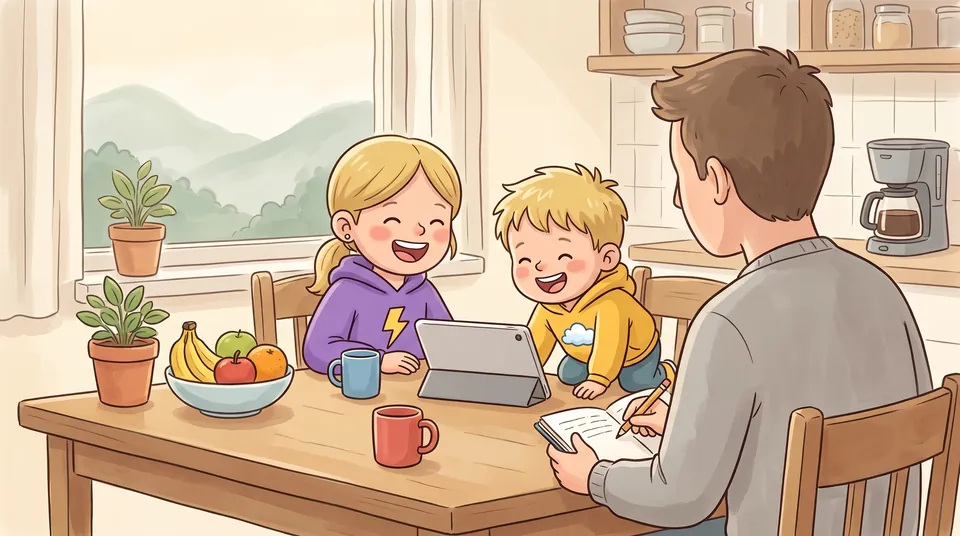
Saturday morning, a classroom in The Hague. Two children sit at the lesson, and in the corridor a dad tries to remember whether 谢谢 has a falling tone or a neutral one at the end. That dad is me. My daughter Helena is seven and my son Henryk is four. They learn Mandarin Chinese with 刘老师 and 王老师, and I learn it a few steps behind them. I am not a native speaker and I cannot speak Chinese fluently yet. After two years of Saturday Chinese school I now study on my own, which means that at home I am not the teacher. I am the one who sits next to them and practises too.
If you are reading this, you are probably in a similar place. Your child goes to a Chinese class once a week, the textbook comes home in a bag, and you cannot read most of it. This guide is what I have learned so far about helping anyway. It is not advice from a language expert. It is what works in our house, and why we built hehechinese.com around it.
A parent who learns is better than a parent who checks
Most advice on how to teach your child Chinese assumes you can correct them, or that you are raising bilingual children with a native speaker at home. If you do not speak Mandarin, you cannot correct anything, and that is fine, because correcting is the teacher's job. What a child needs at home is someone who makes practice normal: five minutes a day, at the same time, with the same little ritual.
When I learn together with my children, something changes. They are not being tested by me, they are racing me. Helena loves it when she knows a word I have forgotten, and Henryk is happy to repeat after the panda while I get it wrong. A parent who learns shows that making mistakes in a new language is ordinary, and that learning a language is something a family can do together. I would start there: not with what your child must know, but with what you will learn together this week.
Five minutes a day beats one hour on Sunday
The class is once a week. Between lessons a young child forgets most of the new words, and the teacher spends the next lesson repeating. We want the opposite: children who arrive ready, already knowing the words and hearing the tones, so the lesson can be about playing, celebrating what they can do, and learning from the teacher.
Short daily practice works better than a long session at the weekend, because memory for new words is built by coming back to them many times. This is how kids learn Chinese words that stay, and it is the same for adults. In our house that means five minutes after school or before bed. No worksheet, no sitting at a desk. Listen to the words of this week's lesson, play one round of a game, say goodnight in Chinese.
Start from the book your child already has
Children in a Chinese school at the weekend in Europe usually learn from a few textbooks: 幼儿汉语 (Youer Hanyu) for the youngest, 汉语拼音 (Hanyu Pinyin) for the sounds, and 中文 (Zhongwen, the European primary school edition). The textbook decides which words come this week, so home practice should follow it, not a random app.
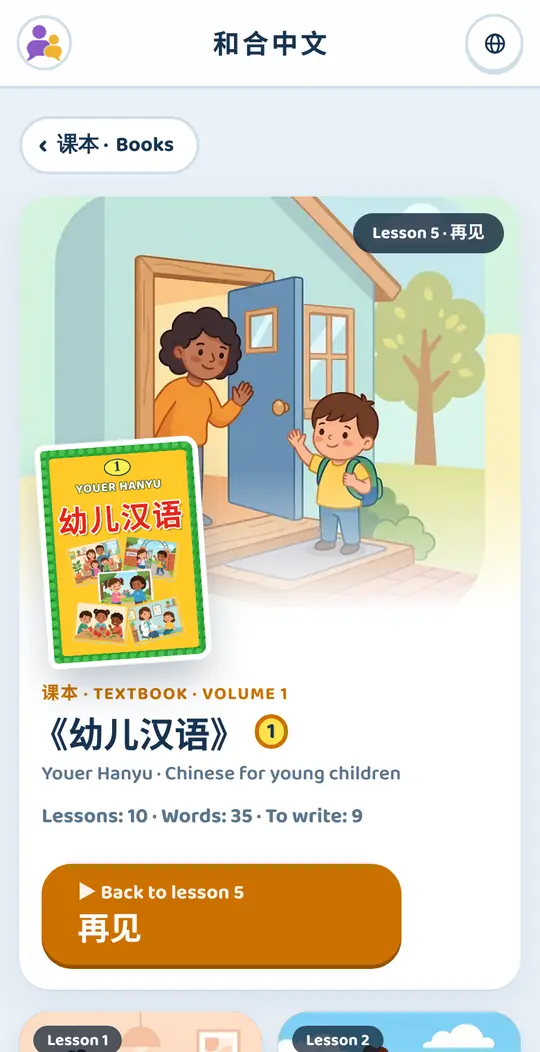
This is the main reason hehechinese.com exists. Pick your child's book and you get every lesson with its words, pinyin in tone colours, a picture and a natural-sounding voice, checked by the teacher. You do not need to read Chinese to use it. You tap a card, you both hear the word, your child repeats. If your child's book is missing, tell us, and we will add it.
Let the ear lead
Young children learn tones by ear far better than adults. Helena sings Chinese songs with tones I cannot hear yet. So I stopped worrying that I would teach her a wrong tone and started giving her more to listen to.
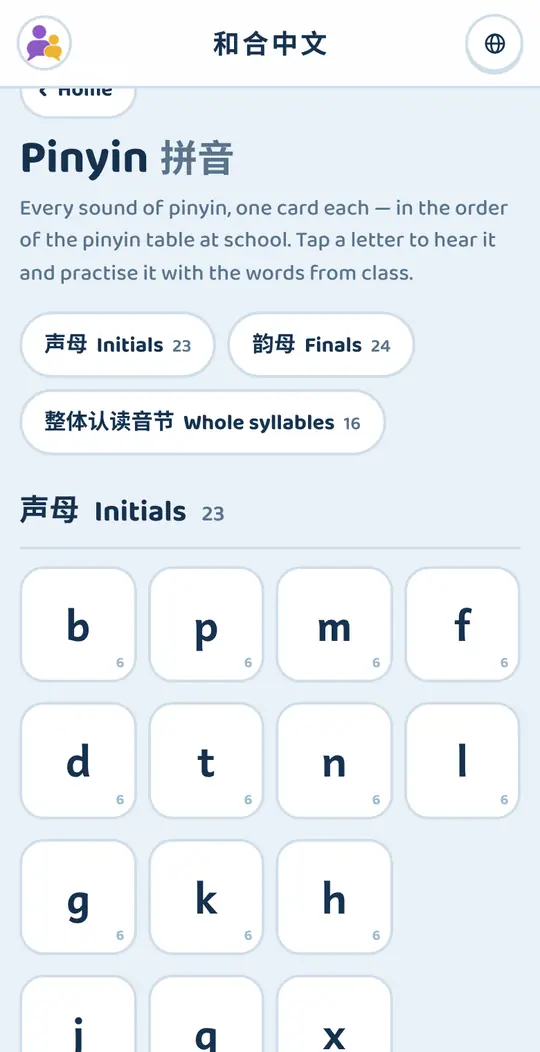
Three things help. Listen before reading: every word on the site plays when you tap it, and in the lesson you can hide the pinyin so your child says the word from memory. Use the tone colours: first tone orange, second green, third blue, fourth red, so a child sees the melody of a word long before they are able to read Chinese characters. And sing: songs built from lesson words stay in the head longer than lists. We are now making short songs for each lesson, and the first ones are being checked by the teacher.
Make it a game, not homework

Children do not want to study. They want to play, and they want to win. On the site the most popular page by far is Panda run (熊猫快跑): a panda runs on three lanes, your child hears a word and runs to the right picture. A mistake is only a stumble, and the word comes back a few moments later. Henryk plays it with pictures. Helena plays it with characters and with tones, which is harder than it sounds.
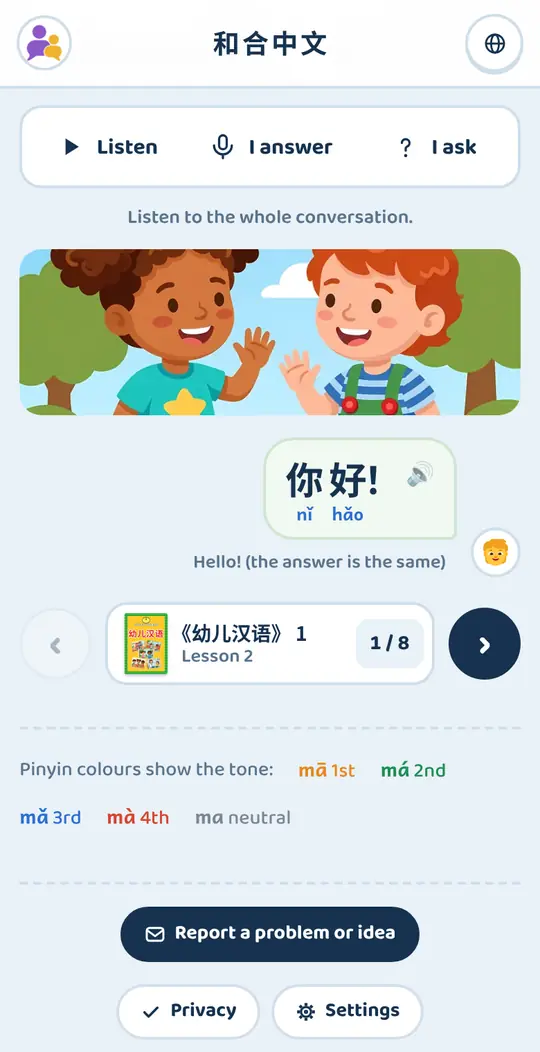
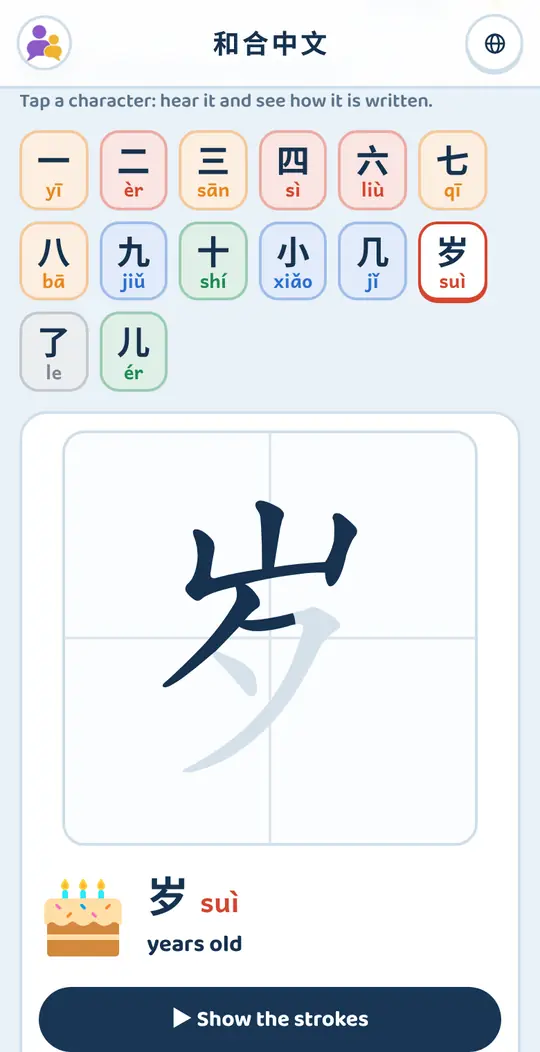
Two more things work for us. Conversations: in each lesson the panda asks a question from the book, your child answers into the microphone, then hears their own answer next to the model. And writing: for the older children every character in the lesson can be traced stroke by stroke on the screen.
What about apps and AI?
General language apps are made for adults or teach their own vocabulary, which is rarely the vocabulary of your child's textbook. That is the main problem, not the quality of the app. A child who practises different words at home than at school is doing two courses at once.
AI voice assistants are different, because you can tell them exactly which words to use. On every page of our site there is an AI practice button. It is switched off by default, a parent turns it on, and it gives you a ready instruction for ChatGPT or Gemini voice mode: the AI plays with your child for about ten minutes, only with the words from the site, in your own language, and Chinese only for the practice. I would treat it as a bonus for older children, not a replacement for listening and games.
At what age can a child start learning Chinese?
Henryk started at three, and at four he recognises words from his book and copies the tones. For the youngest, start with pictures and sounds only. Characters can wait. From about six, children in our Chinese class read pinyin and recognise their first Chinese characters, and many of them enjoy learning to write. Learning to read Chinese takes years, and that is fine: speaking and listening come first. There is no age that is too early for listening, but there is an age that is too early for worksheets.
A simple weekly plan
Here is what a normal week looks like for us. On the day after the lesson we open the lesson on the site and listen to all the new words once. On the next days, five minutes: one round of Panda run, one conversation with the panda, and for Helena one character to trace. The evening before the lesson we listen to the words again, so they arrive ready. Once a month, when a child is in the mood, we try the AI practice together.
- Lesson dayclass with the teacher
- Day afterlisten to all new words
- 5 minPanda run + talk with the panda
- 5 minPanda run + talk with the panda
- 5 minPanda run + talk with the panda
- 5 minPanda run + talk with the panda
- Evening beforelisten again
Nothing on the list needs you to speak Mandarin. It needs you to be there, to press play, and to be the one who gets the tones wrong and laughs about it.
Why this site is free
Everything on hehechinese.com is free, without accounts or ads, and every lesson is checked by the teacher. We built it for our own children and for their classmates, and then parents from other groups and other schools started to use it. If it helps your child, the best thing you can do is tell another parent from your class.
The lesson at school and the practice at home are two different worlds for a child. Our job as parents who are still learning is not to replace the teacher. It is to bring those two worlds together, five minutes at a time. 加油!
a dad